Readings for Sociology 43402
Population Dynamics
Fall 2014 [Course is Finished]
NOTE: Readings will be posted at least a week or two in advance. If you want to get a feel for what is coming, you can check out the Spring 2014 Reading List. Readings this year will be similar, with a few additions and deletions.
Part I of Course:
Historical Overview
Are more people alive now than have even been dead? Carl Haub gives the answer in How many people have ever lived on Earth?
What happens to the age structure of a population when mortality first starts to go down? Ansley Coale's answer may surprise you in How a population ages or grows younger.
The US population hit 300 million in 2006. The Census Bureau helps place that in perspective by comparing the US when it hit 300 million, 200 million and 100 million.
[Optional] In More than Just Numbers, the Population Reference Bureau provided an overview of world population issues at the beginning of the 21st century.
Population, Resources, Environment and Food
If global warming continues, the consequences will be catastrophic, says climatecrisis.net. A 2012 report done for the CIA further outlines the perils of climate change for the US military.
Time and ABC News explain why blizzards and global warming go together. Fox News reviews other perspectives.
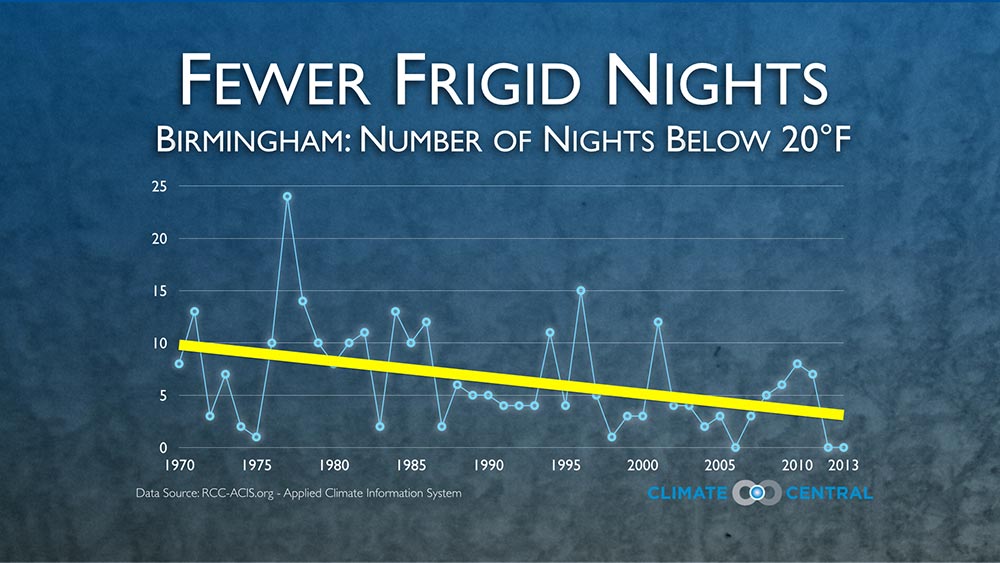
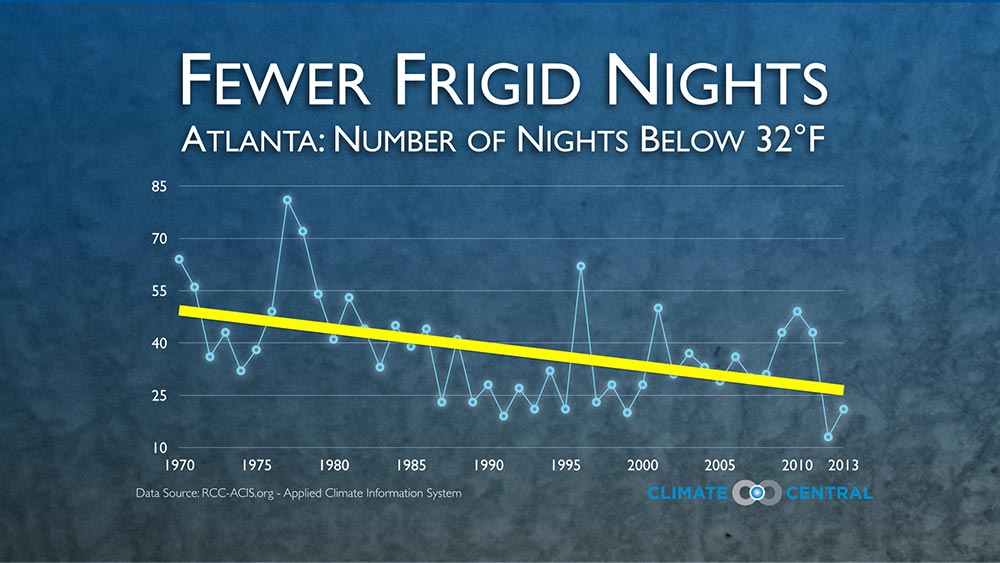
Believe it or not, in much of the US, extreme cold is becoming more rare. XKCD Comics nicely summarized what is going on.
2012 was the hottest year ever in the US. Bryan Walsh asks Now do you believe in global warming? But 16 concerned scientists said there is no need to panic about global warming. Yale Professor William Nordquist explained why he thought the global warming skeptics are wrong.
Bjorn Lomborg has been one of the leading skeptics on climate change. In 2009, he surprised people when he said the evidence on global warming was unequivocal -- but he says current proposals are misguided and we have to find cheaper and more effective ways to deal with the problem. Ross Douthat and David Leonhart debate the conservative case against climate legislation.
"Adding more people causes problems, but people are also the means to solve these problems." So argued Julian Simon in his famous 1981 essay on World Population Growth: An Anti-Doomsday view. Twenty-five years after Simon, Business Week writer Michael Mandel makes similar arguments in What it means to hit 300 million. Frances Moore Lappe's Food First perspective seems to agree with much of what Marx said about population issues and presents these 12 Myths about Hunger. The 19th Century Irish Potato Famine and today's Global Farmland Rush might seem to support Lappe's arguments.
[Optional] 2012 was the hottest year ever in the United States. A science panel says global warming is "unequivocal" and claims that human activity is likely what is responsible. In January 2014 Chris Mooney once again made the argument that Winter does not disprove Global Warming.
[Optional] Experts at the Pentagon say that climate change is a threat to US Security and could lead to military interventions. An August 2013 study claims that global warming could cause a 50 percent increase in violent conflict. A January 2014 UN Study says another 15 years of failure to limit carbon emissions could make the problem virtually impossible to solve with current technologies. A 2009 study warns that even if carbon emissions were drastically reduced, droughts and other severe climate changes tied to the emissions would persist for 1,000 years --but doing nothing would make things even worse.
[Optional] After conducting his own intensive study, UC-Berkeley physicist Richard Muller, one of the most prominent skeptics of global warming in the past, now believes that global warming is real. Muller explains his change of heart in the conversion of a climate change skeptic.Phil Plait noted in January 2014 that almost all peer reviewed articles support global warming.
[Optional] Your text summarizes the Malthusian perspective - but if you want to read the original, here is what Malthus himself had to say in An essay on the principle of population. Charles Kenny does a quick update on the status of Malthusian and Demographic Transition theory today and argues that the bulge in youth worldwide makes a case for optimism. Frances Moore Lappe sees some hope for the Global Food Movement.
[Optional] If you want to check out how extreme cold is becoming more rare in specific cities click here. Here are examples for Birmingham, Chicago, New York, Detroit, Atlanta, St. Louis, and Dallas.
[Optional] George Will takes issue with the doomsayers, and raises these Inconvenient Kyoto Truths. Ross Douthat responds to the critics of his conservative case against against cap and trade legislation. Robert Samuelson says there is a dirty secret about global warming - Any realistic response would be costly, uncertain and no doubt unpopular. That's one truth too inconvenient for almost anyone to admit. But liberal economist Paul Krugman scathingly rejects the conservative arguments and claims that greed and cowardice killed the climate change bill. Four former heads of the Environmental Protection Agency make A Republican Case for Climate Action.
Fertility Concepts and Trends
So, you know exactly how many kids you want, and when, right? It may be a lot harder than you think, explains John Bongaarts in Building a Family: Unplanned Events.
Even societies that make no effort to limit their fertility have far fewer births than is biologically possible. John Bongaarts helps us out again by explaining Why high birth rates are so low.
Yaukey's chapter on Fertility has a lot of additional important information.
[Optional] How many babies can fit inside a pregnant woman? Slate gives the answer in Womb for More.
Birth Cohorts
Every year, Beloit College distributes to its faculty and staff the Beloit College Mindset List, which identifies some facts of life that distinguish this generation from those that preceded it. One of its primary purposes has been an attempt to slow the onset of "hardening of the references" experienced by some faculty. Here is what it had to say a few years ago about the classes of 2015 and 2016.
They were born in the 1930s during the heart of the depression and they grew up during WWII - and they are called the "Good Times Cohort???" Carl Harter explains why. And in this excerpt from the best-selling book Outliers, Malcolm Gladwell talks about how Demographic Luck benefited the 1930s generation.
Newsweek sized up the Baby Boomers as they approached 60. But Richard Perez-Perena says there really isn't a baby boomer generation, since the early boomers and the later boomers have little in common.
A Pew Research Center Report says that Millennials are confident, connected and open to change. But others don't have kind feelings for younger workers. Daniel Gross offers his thoughts about the It-Sucks-To-Be-Me Generation. But Alex Hendersen counters with 10 reasons Millennials are screwed.
Are today's kids overindulged? Amy Chua, author of Battle Hymn of the Tiger Mother, criticizes Western parenting practices and explains Why Chinese Mothers are Superior. But former Harvard President Larry Summers points out that Mary Gates and Karen Zuckerberg weren't tiger moms.
[Optional-Video] Music is an important part of every generation. Audience member Robin Lynn recounts what it is like to be forever immortalized as a 15 year old screaming girl when the Beatles came to America. A quarter-century later, Madonna signed a multi-million dollar deal with Pepsi - only to have it canceled a few days later after her Like a Prayer video appeared. As for your generation, probably no performer has been as influential or as widely imitated as this artist - although some claim that the performances by Stephen Colbert and the Cast of Glee outdid her. Of course, for Baby Boomers, nothing will ever surpass Bob Dylan's Original Version.
[Optional] If interested, you can check out Beloit mindsets for other years here.
[Optional] Psychologist Jean Twenge says that younger generations are increasingly entitled, self-obsessed and unprepared for the realities of adult life - but her critics disagree.
[Optional] Time looks at the firestorm touched off by Amy Chau's book and asks Is tough parenting really the answer? As far as David Brooks is concerned, Amy Chua is a wimp.
[Optional] The low fertility of the Good Times Cohort is nothing compared to what is happening in Japan - causing UT-Austin's John Traphagan to ask is Japan is facing death by demographics?
Fertility Issues: Teenage Sex and Unwed Pregnancy
Almost 40 percent of all babies in the US are now born out of wedlock -- almost double the rate from 1980 and eight times as high as 1960. A June 2014 study finds that for people who don -t have a college degree, having a child in wedlock has become the exception, not the rule. Further, the US lags behind the rest of the developed world in cutting teen births.
Child Trends summarizes the consequences of unplanned and unwanted pregnancy.
There is a lot of concern about teenage sex today - but according to this study, Even Grannie had Sex.
Texas teaches abstinence, but the grades are mixed, says the Washington Post. Anna Quindlen offers her thoughts on the matter. A 2011 study finds that that rates of teen pregnancy are "significantly higher" in states that use "abstinence-only" models, while lower in those that provide a more comprehensive education.
Some legislators want federal programs to encourage marriage. Conservative scholar Michael Tanner disagrees.
In 1992, Republican Vice Presidential nominee Dan Quayle blasted TV character Murphy Brown for having a child out of wedlock. But in 2008, when the pregnancy of Sarah Palin's unwed teenage daughter received a very different reaction, Hannah Rosen asked Why no Scarlet Letter?
[Optional] Since the early 1990s, the US teen birth rate has fallen by nearly 60 percent - but is still 10 times higher than Switzerland. A 2012 study suggests that economic inequality may have something to do with it. Child Trends outlines more work that needs to be done.
[Optional] Career-oriented women who delay having children may be pleased to know that waiting to have kids literally pays off.
[Optional] Emily Yoffe reviews the evidence and says Forget Juno. Out-of-wedlock births are a national catastrophe.
Fertility Issues: Reproductive Technology
It was the first medicine ever designed to be taken regularly by people who were not sick. Its main inventor was a conservative Catholic who was looking for a treatment for infertility and instead found a guarantee of it. Its supporters hoped it would strengthen marriage by easing the strain of unwanted children but its critics charge that it gave rise to promiscuity, adultery and the breakdown of the family. On the anniversary of its approval by the FDA, Nancy Gibbs reflected on The Pill at 50: Sex, Freedom and Paradox.
On its 40th anniversary, National Catholic Reporter John Allen says Humanae Vitae has shown surprising resilience and that the arguments in its favor are even stronger today than in 1968. But former Catholic priest Robert McClory says Church policy has been a disaster.
Controversy rages as a new rule requires Catholic Colleges to pay for birth control.Nicholas Kristof said he would like to avoid offending the bishops but if he had to choose he would go with the health needs of the female half of the population.
Two recent studies claim that free or better birth control could send the abortion rate plummeting and cut worldwide maternity death rates by a third.
Some college women are finding that donating one little egg can make them a lot of money - as much as $50,000.
The Octomom may seem like a bizarre case -- but it raises larger concerns about the practices of fertility clinics.
John Haas explains the Catholic Church's Opposition to Most (but not all) Forms of Reproductive Technology.
[Optional] No girls, please. Parts of Asia have low-tech ways of avoiding unwanted girls - and the methods include murder.
[Optional] A 2012 study from the National Bureau of Economic Research claimed that the pill made women richer and helped to close the wage gap.
[Optional] Some young Catholic women are trying to modernize the Church's image and promote chemical-free natural family planning.
[Optional] The Washington Post explains how the Catholic Church almost came to accept birth control.
[Optional] Literally hundred of scholars and religious leaders from Notre Dame and elsewhere said the Obama accommodation on birth control coverage and religiously affiliated institutions was unacceptable (just read the first 2 pages, the other 38 pages are signatures.) Liberal Catholic Joan Walsh countered that Catholics need to preach what we practice. Tara Culp-Pressler argues that the birth control method Hobby Lobby won't cover is leading to a decline in teenage pregnancies.
[Optional] Williams Saletan says the era of designer babies may finally be here. But who needs high tech? Learn how to get the child you want via the Ancient Art of Making Babies.
[Optional] David Plotz tells you How to find the Right Sperm Donor.Laura Fording gives a Crash Course on Contraception.
[Optional] Are you thinking about using high tech methods to have your baby? Christine Gorman warns about the dangers in The Limits of Science. In Fertile or Futile, Salynn Boyles cautions that older women especially need to be aware of the limitations and risks.
[Optional] Vatican opposition to the use of condoms in AIDS-stricken Africa has created a firestorm of controversy. A man who was considered for the Papacy agrees that condoms are the "lesser evil" versus AIDS and questions other fertility-related church positions as well. But John Allen argues Pope Benedict was right to oppose condoms.
Fertility Issues: The Battle Over Reproductive Rights
How did Susan B. Anthony and other early feminists feel about abortion?
There are ongoing battles over whether or not abortion should be legal - but according to one study, across the world, abortion rates are the same whether it is legal or not.
It is called "screening" but George Will says it is really a search and destroy mission in the attack on kids with Down Syndrome. Time notes that the life prospects for those with Down Syndrome have never been better - and the ability to abort them has never been greater.
Georgia Right to Life touched off a firestorm of controversy when it launched a campaign claiming abortion is the primary tool in a decades-old conspiracy to kill off blacks. But Linda Greenhouse says Shirley Chisholm, the first black woman in Congress, would strongly disagree.
Douglas Kmiec is a conservative legal scholar, a former law professor at Notre Dame, and a past advisor to Ronald Reagan and Mitt Romney. But in 2008, he said Sorry McCain. Barack Obama is a natural for the Catholic vote. Catholic scholar Nicolas Cafardi, former dean of the Duquesne Law School, argued that in 2012 Barack Obama was more Pro-Life than Mitt Romney. But George Weigel made it clear that he has major disagreements with the Pro-Life Catholics for Obama.
View Heisman Trophy winner Tim Tebow's seemingly innocuous Super Bowl ad that ignited a national controversy. Pam and Bob Tebow expand on their pro-life beliefs and their decision not to abort Tim despite the great risks. But William Saletan countered with what he called the grisly truth about the ad.
Bill O'Reilly called murdered abortion doctor George Tiller Tiller the Baby Killer, but Barbara Shelley claims he helped thousands. William Saletan asks troubling and provocative questions in Is it Wrong to Murder an Abortionist?
In September 2014 Texas gubernatorial candidate Wendy Davis - revealed that she had had two abortions for medical reasons, causing religious leaders to debate is there a Christian Case for Abortion Rights?
[Optional] A Catholic Notre Dame Philosophy Professor asks Should Pope Francis Rethink Abortion? A former activist explains How I lost faith in the pro-life-movement. (A little long and quite one-sided, but it does a very good job of summarizing many major arguments).
[Optional] In the views of alumnus Paul Witkowski, On abortion, Notre Dame gets only marginal grades.
[Video-Optional] Former Secretary of State Hillary Clinton argues that, for the women of the world, abortion should be legal, safe, and rare.
[Optional] Barack Obama's March 2009 decision to expand federal funding for stem cell research exposed sharp religious divides on the issue. Nancy Reagan and Arthur Caplan praised the decision. Parkinson's victim Michael Kinsley explains what pro-lifers are missing in the stem cell debate.
[Optional] The ALS Ice Bucket Challenge went viral in Summer 2014 -- but some pro-life leaders denounced it.
[Optional] After the Susan G. Komen Controversy, Notre Dame Professor Carter Snead and Princeton Professor Robert George blasted Planned Parenthood's tactics. But John Saveland explained why he's pro-life and supports Planned Parenthood while William Saletan argued that funding Planned Parenthood was the best way to reduce the need and demand for abortions.
[Optional] Studies from the Guttmacher Institute offer facts on induced abortion in the United States and Worldwide, and also examine the reasons US women have abortions.
[Optional] Sister Margaret McBride was excommunicated for agreeing to an abortion that probably saved a woman's life. Pro-life Catholic Julianna Baggott and columnist Nicholas Kristof defended her.
[Optional] Controversial statements on rape and abortion affected several key races in 2012. But William Saletan said these candidates weren't outliers and that banning abortion for rape victims is the new Republican mainstream. Personhood USA countered that a baby is not the worst thing that can happen to a rape victim -- an abortion is.
[Optional] In Leeches, Lye and Spanish Fly, Kate Manning warns about the dangers of illegal and unsafe abortions.
[Optional] Some said "The poster child jumped off the poster" when Norma McCorvey (Roe of Roe V. Wade) decided to become a volunteer for Operation Rescue.
[Optional] In 2004, it was Notre Dame intramural warfare as scholars Mark Roche, Robert George and Gerard Bradley, and Charles Rice battled over whether or not Catholics could vote in good conscience for John Kerry. Joe Feuerherd is against liberal abortion laws and is a former correspondent for the National Catholic Reporter. But in 2008 he asked I voted for Obama. Will I go straight to ...?
[Optional] Professor Ralph McInerny claimed that Notre Dame forfeited its right to call itself a Catholic university when it invited Barack Obama to speak at commencement. Bishop Fabian W. Bruskewitz of Lincoln said he was "utterly appalled" by Omaha native and ND President John Jenkins' "absolute indifference to the murderous abortion program and beliefs of this President of the United States." Professor Richard Williams had kinder words for his fellow Nebraskan.
[Optional] Columnist Margaret Carlson is pro-choice - but even she isn't comfortable with Partial-Truth Abortion.
[Optional] Religious groups, scientists and doctors debate whether some popular forms of contraception cause abortions.The New York Times reviews the scientific evidence and concludes abortion qualms on the morning after pill may be unfounded.
The Status and Roles of Men and Women
March is Women's History Month.
Employed women are working a Second Shift when they get home, says Arlie Hothschild. Demographer and ND graduate Suzanne Bianchi, on the other hand, finds remarkable gender equality in total workloads.
Many feel that schools shortchange girls. Not Christina Hoff Sommers. Indeed, she thinks there is a War Against Boys [excerpts]. Judith Warner, on the other hand, says the Boy Crisis is little more than a myth. In her 2013 op-ed piece The Boys at the Back, Christina Hoff Sommers updates her arguments on the war against boys.
Why are boys so unruly? It is in their nature, says Christina Hoff Sommers, and efforts to make them more docile and emotional are misguided.
Jennifer Britz apologizes to all the girls she has rejected - for admission to college. But apologies are not enough, says Richard Whitmire. He says women are discriminated against in college admissions and they ought to sue.
Women are now the backbone of the economy, says Kate Snow. In The End of Men, Hanna Rosin reports on the unprecedented gender role reversal now under way and its vast cultural consequences. [Pages 7, 8 and 13 are required; the rest of the article is highly recommended.] But Stephanie Coontz attacks The Myth of Male Decline.
Politifact assesses the accuracy of the often made claim that women make 77 cents for every dollar a man earns
Sheryl Sandberg, the chief operating officer of Facebook, attributes the gender gap in corporate leadership to chauvinism and corporate obstacles -- but also, in part, to women who don -t aggressively pursue opportunities. Eve Tahmincioglu counters that women are doing all the right things but they still lag behind men.
[Optional] Nancy Gibbs reviews 40 years of US history and examines what women want now.
[Optional] Dan Abrams argues that Women Rule as doctors and investors. But anesthesiologist Karen Sibert says too many women doctors are working part-time and leaving the profession and we can no longer afford to continue training doctors who don -t spend their careers in the fulltime practice of medicine. Eye surgeon Carolyn Anderson thinks Sibert is distorting the statistics and being unfair to women and explains why doctors should be allowed to work part-time.
[Optional] The AFL-CIO provides these Vital Statistics for Professional Women in 2010.
[Optional] On September 20, 2011, Hanna Rosin, Christina Hoff Sommer, and others participated in a debate entitled True or False: Men are Finished. And the winner was... The video (One hour and 49 minutes) is great if you have time to watch it. Time permitting, we will show excerpts in class. But Hanna Rosin faced much more formidable opponents in this 5 minute debate.
[Optional] The week of Jan 14, 2008, NBC Nightly News ran a series of stories and videos entitled The Truth about Boys and Girls, covering many of the same topics covered here. See especially the videos on college admissions.
[Optional] Liza Mundy talks about how the rise of female breadwinners is changing the world in Women, Money and Power.
[Optional] Tara Siegel Bernard offers A Toolkit for Women Seeking a Raise.
[Optional] US News elaborates on the problems colleges are having in recruiting enough males.
[Optional] The late Suzanne Bianchi received her Master's Degree from Notre Dame. Her New York Times Obituary covered some of the highlights of her life's work on gender roles.
[Optional] In this 2005 report, Lori Ashford takes stock of women's progress worldwide.
Demographics
John Weeks provides a brief overview of the field of Demographics.
Fareed Zakaria and Paula Throckmorton-Zakaria explain why advertisers historically haven't liked old people. The New York Times explains why media executives are starting to realize older people aren't so bad after all.
Newsweek talks about the biggest and potentially most powerful emerging market in the world -- Women. Advertising Age agrees, and offers seven tips on how to successfully market to them. Gloria Steinem probably wishes those pieces had come out sooner -- in 1990's Sex, Lies and Advertising, she outlines the problems Ms Magazine had in overcoming stereotypes and attracting advertisers.
American Demographics Magazine explains 10 major marketing blunders of the 1980s.
Brands are waking up to waking up to the opportunities that the LGBT market represents. South Bend's Gavin Ferlic argues that cities benefit economically when they are gay-friendly.
GOP consultant Mike Murphy warns that For Republicans, the Ice Age Cometh if the party doesn't make changes. But in 2010 there was a Rightward March with Turnout being a key factor as millions of past Democratic supporters (including youth) stayed home.
Never click on those Facebook ads? It doesn't matter. Facebook is making you buy things anyway. Further, Facebook may have helped Obama win the youth vote in 2012. But on election day, Facebook Obama was getting desperate.
[Optional] Philip Harper asks, Men or women: Who's the better entrepreneur? Joanna Krotz explains why women make better managers. In The Million Women March, Jennifer Barrett describes what female entrepreneurs are doing to help themselves--and their sisters.
[Optional] In spite of how important they are, the auto industry is still making lame attempts to target women.
[Optional] Marketers are catching on to the fact that a fourth of the world is Buying Muslim. In the US, the Hispanic and Minority markets offer a lot of opportunities and benefits to marketers.
[Optional] Ron Brownstein claims that Demography and Destiny favor the Democrats. Republican Bill Greener laments that his party may be too old and too white to win, John Judis asks Is the Republican Comeback Just a Flash in the Pan? Ruy Texeira explains why Demography favored Obama in 2012.
[Optional] Avis says we came out in our own time - and other companies are too as they adopt gay-friendly policies. DiversityInc says that if you want loyal customers, you should learn how to reach gay consumers.The NY Times reports that When the Bride takes a Bride, Businesses Respond. Companies that emphasize their gay-friendly policies include Southwest Airlines, JP Morgan, Dell, Wal-Mart and JC Penney. But the One Million Moms aren't happy about this.
[Optional-Video] Apple's 1984 is one of the most famous ads of all time. A Barack Obama supporter put a new spin on it in 2007. Lyndon Johnson used an adorable little kid to warn what might happen if you voted for his opponent. (Here is more on how LBJ's Mad Men revolutionized political advertising.) Hillary Clinton got back in the 2008 race because at 3 a.m. she's ready to take that call. Meanwhile will.i.am put Barack Obama's words to music. In 2012, Lena Dunham sparked controversy when she told young adults who their first time should be with (first time voting, that is). Dove stressed soft skin in 1986 while in 2006 it showed its true colors. In what former Senator Alan Simpson says is the most disgusting ad he has ever seen, the AARP warns what will happen to any politician who tries to cut social security.
Marriage, Divorce, Families & Households
Historian Stephanie Coontz says Marriage isn't dead but it is changing. Coontz further explains why Romance Wrecked Family Stability.
In 2010's I don't, Jessica Bennett and Jesse Ellison made the case against marriage. The conservative group United Families International responded with the case against the case against marriage. The no's may be gaining ground, as a 2012 Pew study predicts that a quarter of millennials will never get get married.
A recent study finds that cohabitation has become the "new normal" and most women cohabit before they are 30. Meg Jay discusses the downside of cohabiting before marriage. But a 2014 study says cohabitation doesn't cause divorce and probably never did.
In a 2014 study, Sociologist Jennifer Glass explains the puzzling paradox of why divorce is more common in religiously conservative "red" states. Anneli Rufus outlines 15 ways to predict divorce.
Should you Stay Together for the Kids? Judith Wallerstein says yes - but Katha Pollitt says Divorce is getting a Bum Rap.
He is one of the most famous Republican lawyers in the country. He represented George Bush in Bush vs Gore 2000 and then served as Bush's Solicitor General. His wife died in 9/11. And today, Theodore Olson makes the conservative case for gay marriage. The American Sociological Association filed a court brief reviewing the evidence on gay marriage. John Harwood says that the vast majority of US corporations have already voted yes on gay marriage. Former presidential candidate Rich Santorum makes his case against gay marriage. Long time lesbian partners Martha Ackelsberg and Judith Plaskow explain why we're not getting married. Notre Dame and other area religious schools say what they'll do now that same-sex marriage is legal in Indiana.
[Optional] Is a single woman over age 40 more likely to get killed by a terrorist than she is to get married? We used to think so, but in Marriage by the Numbers Newsweek admits that the states of unions aren't what we predicted they'd be.
[Optional] Historian Stephanie Coontz upends conventional wisdom in Three Marriage Rules that Don't Apply and The Triumph of the Working Mother.
[Optional] Karen Prior from Liberty University makes the case for getting married young. Kate Dailey explains why she is saying I do. In 2010 Jessica Bennett helped make the case against marriage; but in 2012 she had second thoughts and wondered if she was Missing the Boat. Taylor Tepper knows there is a downside to having kids but he thinks millennials ought to have them anyway.
[Optional] Richard Banks explains why black women have the lowest marriage rates and offers his ideas on what they should do about it. Nika C. Beamon notes that many single successful black women are rising above the wedding ring.
[Optional] Oh no! It's a girl! Steven Landsburg asks Do Daughters cause Divorce?
[Optional] A lot of people think that cohabitation before marriage helps you make sure you have the right partner - but Cohabitors' Divorce Rates May Suggest Otherwise. But the Alternatives to Marriage Project argues that cohabitation isn't such a bad idea.
[Optional] The National Center for Health Statistics outlines the factors related to the likelihood of remarriage.
[Optional] Here is the complete ASA brief on Gay Marriage. Stephanie Pappas reviews the empirical evidence and argues that gay parents may be the best parents. The world's largest study on the children of same-sex parents says they are doing as well or better than the rest of the population on key health indicators.
[Optional] Recent polls show a dramatic increase in support for gay marriage. Hundreds of public figures from across the political spectrum rushed to offer their support for gay marriage before the Supreme Court took up the subject. If marriage is in trouble, Barbara Kantrowitz says don't blame gays - It is Straights who Changed the Rules. In 2011 Barbara Bush (George's daughter) joined the ranks of Republican offspring who support gay marriage (here is her 22 second video) and Iowa college student Zach Wahls (3 minute video) made an impassioned appeal on behalf of his lesbian parents. In this short video clip, The Golden Girls made the case for gay marriage more than 20 years ago.
[Optional] The Heritage Foundation makes its case against gay marriage. Young conservatives don't think the battle is over yet. Gay activist Katherine Franke warns that same-sex marriage is a mixed blessing.
[Optional] Should the children of gays be allowed in Catholic Schools? The Archdiocese of Denver doesn't think so. Bill O'Reilly and Father Jonathan Morris debate the issue.
[Optional-Video] Beyonce offers advice on marriage. Jill and Kevin dance at their wedding. But Dolly Parton warns that marriage doesn't always work out.
Health, Disease, Mortality & Aids
Laura Helmuth offers a detailed explanation of why life expectancy has doubled in the last 150 years. George Johnson explains why everyone seems to have cancer. Sanja Gupta discusses why men die young.
We are used to hearing about malnutrition as a problem - but recent studies warn that increasing numbers of obese people worldwide could lead to a "global tsunami of cardiovascular disease". However, Paul Campos claims that a recent study proves we have an absurd fear of fat but others disagree. An economist offers his theory as to why we are fat.
The Center for Disease Control provides a 2013 overview of the HIV/AIDS epidemic in the US. The United Nations wants to end AIDS by 2030.
Recent studies show that hospital billing varies wildly in the US. Professor Gilbert Welch thinks we should be outraged about the cost.
Vaccines have been a subject of hot debate in recent years. A simple graphic shows how Vaccines have changed the world. Steven L. Weinreb pleads For the Herd's Sake, Vaccinate. Blogger KATETIEJTE describes the worst things people say about unvaccinated kids while L. Shaka counters with The worst misconceptions parents of some unvaccinated children hold.
Karen Springen asks why are HPV vaccine rates so low? Maybe it is because some feel the HPV vaccine isn't safe even though health officials claim it is.
Breast cancer is one of the leading killers of women worldwide, and Susan G. Komen for the Cure is among the groups that have been battling it. But cancer survivors Barbara Ehrenreich and Peggy Orenstein are among those who criticize the way the battle is being waged.
[Optional] CBS News (video) reports in March 2008 that the life expectancy gap between the haves and have-nots is growing . Further, younger Americans die earlier and live in poorer health than their counterparts in other developed countries. But Charlene Gaino has some good news for men - the gender gap in longevity is narrowing. Meanwhile, Sheila King outlines the hazards of smoking for women. Juan Williams points out that homicide is the #1 killer of young black men.
[Optional] In a rather depressing piece, Time Magazine explains Why Exercise Won't Make You Thin. In the Culture of Corpulence, Claudia Kalb argues that American innovations in food, transportation, and technology are threatening to supersize us all. David Zinczenko says don't blame the eater - blame the fast food companies that are marketing a product with proven health hazards and no warning labels. Sam Ali argues that the food industry profits while society pays and that the food industry is following big tobacco's playbook.
[Optional] Sarah Richards outlines how colleges are struggling with ways to treat suicidal students.
[Optional] Nearly 47 million Americans lack health insurance, including many members of the middle class. In 2007 Robert Pear discussed how, for many of them, Without Health Benefits, a Good Life Turns Fragile. A real-world experiment in Oregon suggests that expanded health care coverage is an economical way of making Americans better off.
[Optional] Incredibly high bills for child birth, asthma, and colonoscopies are among the reasons the United States leads the world in health care costs. Just revealing the prices for health care can help. But Paul Krugman expresses optimism over health care costs because of the Medicare Miracle.
[Optional] Sociologist Jeffrey Pfeffer tries to set the record straight on health care reform. Paul Krugman attacks Health Reform Myths. The conservative Hoover Institution offers a less favorable opinion on Obama's health care package.
[Optional] The health care industry is changing as more physicians are saying no to endless work days.
[Optional] Sharon Begley discusses how vaccines (unfairly) became villains in the autism debate. A pediatrician claims to debunk the most common misconceptions about childhood immunizations. Counter to the fears of some, the HPV vaccine does not seem to affect sexual behavior; further it is lowering teenage infection rates, A British investigation says the Wakefield Autism Study was an elaborate fraud that continues to damage public health.
[Optional] Food, shelter and clean water are what aid agencies emphasize. But if we really want to battle some of the biggest killers of children worldwide, Rose George says we have to get over our squeamishness and send in the latrines.
[Optional] He may not have been the most popular president in the United States - but in Africa, George Bush is praised for helping to save millions. Nicholas Kristof adds that America can be proud of Bush's efforts to battle sex trafficking and HIV.
[Optional] A 2005 study showed that 53% of African Americans believe that medical and political authorities are withholding an AIDS cure from the poor - and those conspiracy beliefs may be hindering HIV prevention. The United Nations gives a 2014 Fact Sheet on AIDS.
[Optional] The New York Times elaborates on how Susan G. Komen for the Cure became a fundraising superpower and on the criticisms and praise it has received.
Aging: The Elderly & their Caregivers
The Census Bureau offers lots of statistics pertaining to the elderly in honor of Older Americans Month May 2014. The Federal Interagency Forum on Aging provides a demographic profile of the elderly.
More and more women are on the daughter track, raising their own kids and helping their aging parents. Melissa Segrest further explores the plight of the caregivers in the sandwich generation.
[Optional] The Today Show offers advice on how to take care of the caregivers.
[Optional] Here is the complete February 2011 report from the Population Reference Bureau on Aging in America. Here is the complete report from The Federal Interagency Forum on Aging on Older Americans 2010.
Aging: Generational warfare? Clashes between the young and the old
In this classic 1984 paper, Samuel Preston explains how and why American society has shifted support away from children and toward the elderly.
In November 2011, the US wealth gap between the young and the old was the widest ever.
Preston's arguments get updated in Generation Excluded and meet the greedy grandparents.
Aging: Social Security & Retirement
The Wall Street Journal says that without Social Security, a majority of US Seniors would be poor.
In January 2011, Fox News argued that the Baby Boomers Could Force Economic Catastrophe. Moveon.Org counters by attacking what it calls the Top 5 Myths about Social Security. Paul Krugman says the Geezers (and Social Security and Medicare) are all right.
[Optional] A report from the Population Reference Bureau warns that the the health and financial security of the elderly worldwide is being threatened.
[Optional] The Associated Press says Baby Boomers are approaching age 65 with their retirements in jeopardy.The Wall Street Journal explains why Boomer Retirement Plans are coming up short. The New York Times offers ideas on How to Make the Most Out of Less. After the financial meltdown, what is the new retirement plan? Keep working, John Schoen says.
[Optional] When he visited Notre Dame, in 2005, President George Bush made an unsuccessful plea for the privatization of Social Security. Bush claimed that Social Security was unfair to African Americans - but Paul Krugman accused him of telling little black lies and also argued that privatization is a fake solution to a fake crisis. But George Will said that Social Security reform represents an opportunity, not a crisis.
[Optional] Barry Schwartz opposes the privatization of Social Security in Choose and Lose. George Will extends his arguments for Social Security reform in tell that to your children. Elliot Spitzer, on the other hand, wants to know if we can finally kill the terrible idea of privatization?
Aging: The Future of Aging
[Optional] The Population Reference Bureaus reviews the research highlights on the future of life expectancy and asks Have We Reached the Ceiling or is the Sky the Limit? But even if we can live longer, Time Magazine warns that we should be careful what we wish for.
[Optional] Time says we can live to be 100. Jeffrey Kluger offers hopeful evidence that we can stay young. But Robert Bazell warns we may live better, but not much longer. Charlene Laino elaborates on the pessimistic case and notes that life span forecasts are often exaggerated.
Race: The Relevance of Race
In three is not enough, scientists debate whether or not race is a useful concept.
In one drop of bloody history, Ellis Cose notes that Americans have always defined themselves in terms of race.
An African American mother tells her biracial children Don't be black on my account.
[Optional] For the first time ever, minority babies will be in the majority in 2010.
[Optional] In I'm just who I am, Jack White argues that the way Americans think and talk about race will have to catch up with the new reality.
[Optional] Nicholas Kristof further explores the question Is race real?
[Optional] The NY Times offers the latest statistics on interracial marriage. In love and race, Nicholas Kristof reports that instead of preying on people of different races, young Americans are falling in love with them.
[Optional] The New York Times details the path by which the descendant of a white slavemaster became First Lady of the United States.
[Optional] Some claim that Barack Obama isn't the first black President - either because there were other black Presidents before him or because he isn't really black.
[Optional] Slate examines when and how the word Negro became taboo.
[Optional] MSNBC reports that multiracial Americans are surging in number and voice. The NY Times says that when it comes to choosing white, black or Asian, more young Americans are choosing all of the above. But Lauren Williams explains why she thinks biracial means black.
[Optional] The Census Bureau offers several facts and figures that are relevant for African American History Month 2014 and Hispanic Heritage Month 2014. For information on other minority groups, see the Census Bureau Facts for Features web page. For more on Hispanics, see the Census Bureau Report on The Hispanic Population 2010.
Race: Housing & Segregation
Joe Feagin explores the causes and consequences of excluding blacks and others from housing.
In a fascinating case study, Kevin Fox Gotham shows how segregation was developed and reinforced in Kansas City in Building the Troost Wall.
America Magazine raises concerns for the future of minority home ownership in Housecleaning.
[Optional] Doug Massey says that racial discrimination in housing is a moving target. In 2009's One Stroke of the Pen Richard Williams briefly outlined the 47 year struggle to end racial discrimination in housing.
[Optional] It used to be that minorities were denied mortgage loans. Now they get them, but often with unfavorable or even predatory terms. Richard Williams and colleagues discuss these shifts in The Changing Face of Inequality in Home Mortgage Lending. Bond and Williams further discuss the implications of these changes in Residential Segregation and the Transformation of Home Mortgage Lending. If you don't want to bother reading those rather lengthy articles but still want some idea what your instructor does in his spare time, the Washington Post summarizes a few of the highlights in Subprime Mortgages and Race: A Bit of Good News May Be Illusory.
Race: Diversity & Affirmative Action
[Optional] In 2012 the Supreme Court was flooded with briefs defending race-conscious college admissions. Roger Clegg criticized the Obama administration's support for racial preferences.
[Optional] Several major firms support affirmative action. Ruth Zeilberger discusses why in How the Future of Affirmative Action Affects Corporate America.
[Optional] Adam Clymer explains why the service academies defend the use of race in their admissions policies.
Poverty & Wealth
During the great recession Americans' wealth dropped 40 percent. In December 2011 the Census Bureau reported that 1 in 2 Americans was poor or low income.
In 2006, Forbes Magazine explained why Americans are earning more but think previous generations had it better.
Business Week discusses the role that luck plays in making someone rich or poor.
Nobel Prize winning economist Joseph Stiglitz claims we have a government Of the 1%, by the 1%, and for the 1% - and he thinks even the wealthy will come to regret that.
In this hour-long YouTube video, Harvard's Elizabeth Warren discusses The Coming Collapse of the Middle Class. A little slow the first 5 minutes but very interesting and informative once it gets moving. Watch this on your own if we don't show it in class.
[Optional] Barbara Ehrenreich decided to see what it would be like to be a low wage worker in America. She describes her experiences in Nickel and Dimed.
[Optional] Charles Blow notes that most of the poor are working - but if we want to solve our economic problems we need to do better in the global war for jobs.
[Optional-Video] Elizabeth Warren argues that nobody got rich on their own in her famous one-minute You didn't build that speech.
[Optional] Both left wing and right wing politicians are concerned about the lack of economic mobility in the United States.
[Optional-Video] This 6 minute video graphically depicts Wealth Inequality in America.
[Optional] Mitt Romney talked about the 47% but Amia Srinivasan argues that the rich are dependents of the state too. Joseph Stiglitz claims that our tax system is stacked against the 99% and that Equal opportunity is a national myth. Incomes were flat during the great recovery but not for the 1%. Elizabeth Warren says the Obama administration protected Wall Street, not working people. In this 2014 expose, Rolling Stone claims that JP Morgan Chase paid billions of dollars in fines and still got off easy for misdeeds that contributed to the financial crisis.
[Optional] Former Cabinet Secretary Robert Reich offers some similar points as Elizabeth Warren in The Truth about the American Economy and says that those at the top would be better off with a smaller share of a rapidly growing economy than a large share of one that -s almost dead in the water. (If you have Netflix, you can watch his documentary called Inequality for All.) The International Monetary Fund claims that worldwide widening income inequality is bad for economic growth.
[Optional] Elizabeth Warren discusses how ordinary middle-class families wind up bankrupt in going for broke.
[Optional] In investing in our children, Robert Samuelson argues that government programs can only do so much to combat poverty.
Migration
Michael Powell provides historical perspective in U.S. Immigration Debate Is a Road Well Traveled.
David Brooks argues that the evidence for allowing more immigration is overwhelming.
In undocumented, indispensable, Anna Quindlen argues that we are all immigrants. Some of us just got here sooner than others.
Many people contend that we need greater border security. But Berkeley professor Michael Dear calls on President Obama to Tear down this wall. Doug Massey also argues against The Wall That Keeps Illegal Workers In.
[Optional] Notre Dame's Allert Brown-Gort thinks that US border policy is misguided.
[Optional] Eric Posner says we have a de facto guest worker system, and it works well.
[Optional] In 2010 Philip Martin and Elizabeth Midgley provided a detailed analysis of the status of immigration in America and the controversies surrounding it.
[Optional] There is an ongoing debate about whether or not English should be declared the official language of the United States.
[Optional] MSNBC reports on how Ireland is being transformed by migrants. Here is a video on the topic.
[Optional] NPR and several of the opinion pieces it links to discuss The Debate Over 'Anchor Babies' And Citizenship
Urbanization
[Optional] Martin Brockerhoff outlines the challenges faced by An Urbanizing World.
[Optional] Kingsley Davis provides a historical view on The Urbanization of the Human Population.
[Optional] Martin Brockerhoff describes the problems of megacities in The Urban Demographic Revolution.
The Future
Doug Massey offers a bleak vision of the future in The Age of Extremes.
Columnist David Brooks takes a look at America's future and says Relax, We'll be Fine. Former presidential advisor David Gergen says Cheer Up, America -- we've already climbed several mountains and we have strength for the tough journey ahead. Steven Johnson says We are living the dream - we just don't know it. Bjorn Lomborg reassures us that the world is a lot better place than it used to be.